

Value-Based Care Market—Growth & Opportunity
Market Size & Growth:
- US value-based healthcare services market is projected to grow from $3.6B in 2024 to $8.1B by 2034 at an 8.6% CAGR.
- Broader US VBC service market expected to reach $6.16T by 2030, growing at 7.4% CAGR.
Global Perspective:
- Global VBC market to reach $37.57B by 2032 at a 17.4% CAGR.
Investor Takeaway:
- The sector is experiencing robust, sustained growth driven by payer, provider, and regulatory shifts.
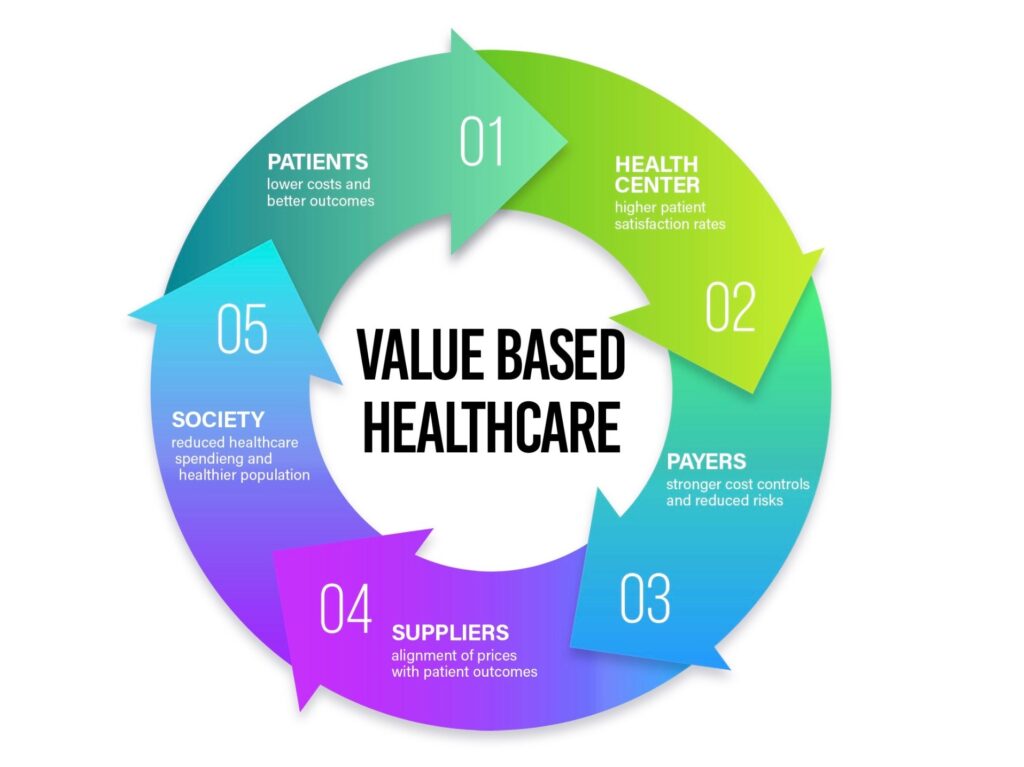
Source: etkho
Key Drivers Accelerating Value-Based Care Adoption
Cost & Outcomes Pressure: Rising healthcare costs and chronic disease prevalence are pushing payers and providers toward VBC models.
Policy & Regulation: CMS aims for all Medicare providers to enter two-sided risk arrangements and half of commercial/Medicaid contracts to be value-based by 2025.
Technology & Digital Health: AI, big data analytics, and digital health platforms are enabling scalable VBC solutions and improved care coordination.
Patient-Centered Care: Focus on patient outcomes, satisfaction, and preventive care is central to VBC’s rapid adoption.
Competitive Landscape & Investment Hotspots
Major Players:
- MVP Health Care
- Humana
- Blue Cross and Blue Shield of North Carolina
- UnitedHealth Group
- Cigna Healthcare
Emerging Opportunities:
- Growth in home-based, virtual care, and population health management.
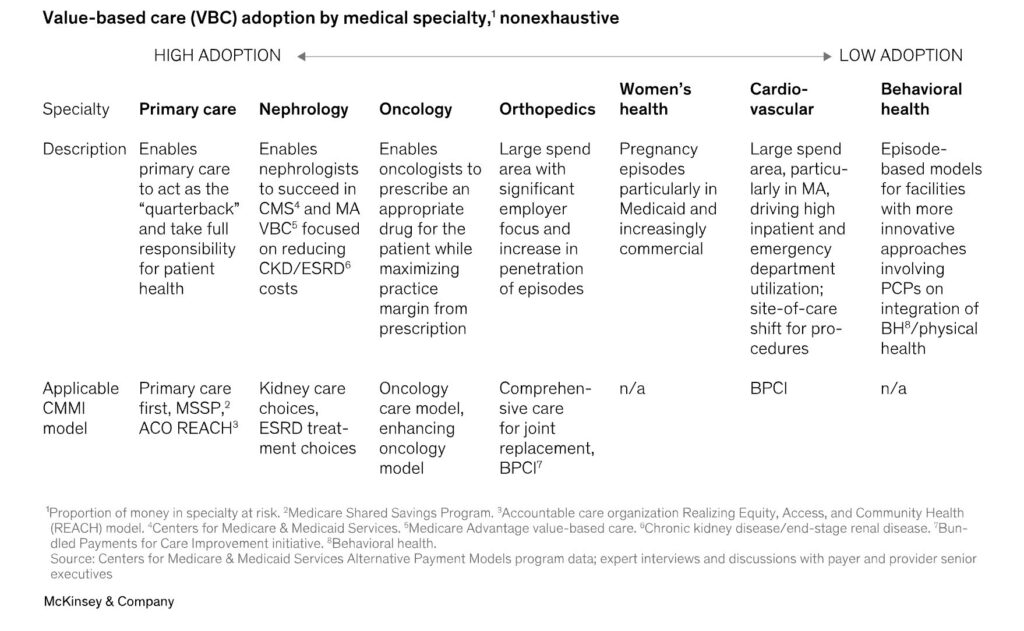
- Expansion beyond primary care into specialties like oncology, orthopedics, and chronic disease management.
Investor Strategy: Target scalable platforms, tech-enabled providers, and companies with strong payer partnerships.
Challenges and Risk Factors for Investors
- Transition Complexity: Providers face operational and financial risk in shifting from fee-for-service to VBC, requiring investment in analytics and care coordination.
- Data & Infrastructure: Success in VBC depends on robust data collection, privacy compliance, and advanced IT infrastructure.
- Market Fragmentation: Balancing legacy payment models with VBC arrangements can limit growth in some regions.
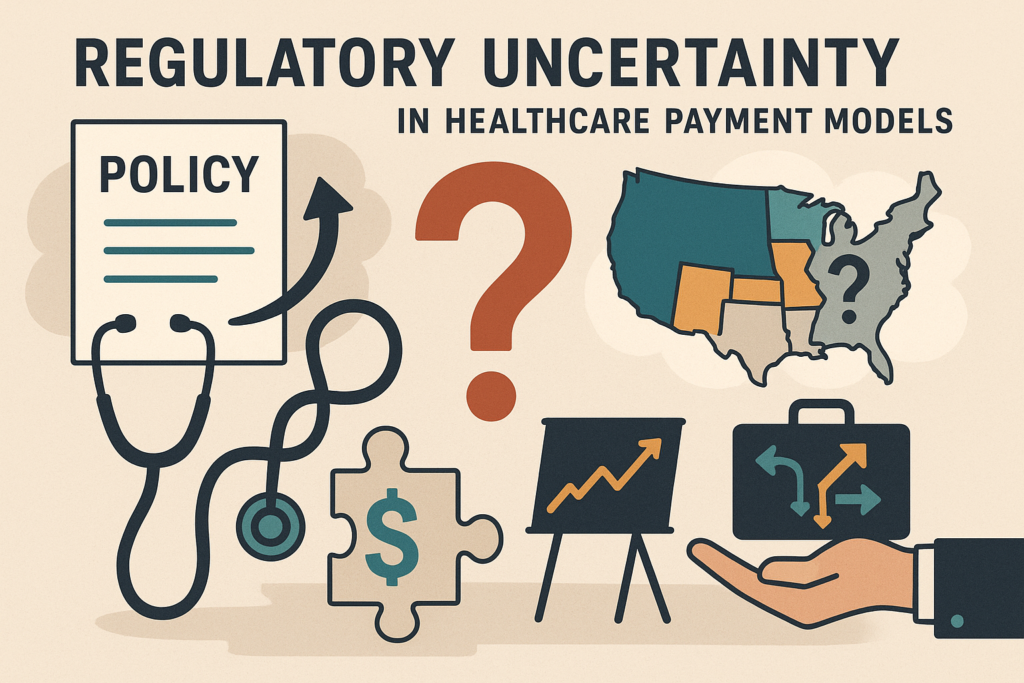
- Regulatory Uncertainty: Ongoing policy changes and regional disparities require careful due diligence and flexible investment approaches.
Strategic Recommendations for PE Investors
Prioritize Tech-Enabled Assets:
Invest in companies leveraging AI, analytics, and digital health to drive outcomes and efficiency.
Focus on Scalable, Patient-Centric Models:
Favor platforms that can expand across geographies and specialties, with proven patient engagement and satisfaction.
Partnerships & Integration:
Seek opportunities with strong payer-provider collaboration and integrated care delivery.
Monitor Regulatory Trends:
Stay agile to adapt to evolving CMS and state-level VBC mandates.
Prepare for Long-Term Value Creation:
VBC investments may require longer time horizons but offer significant returns as the market matures and consolidates.
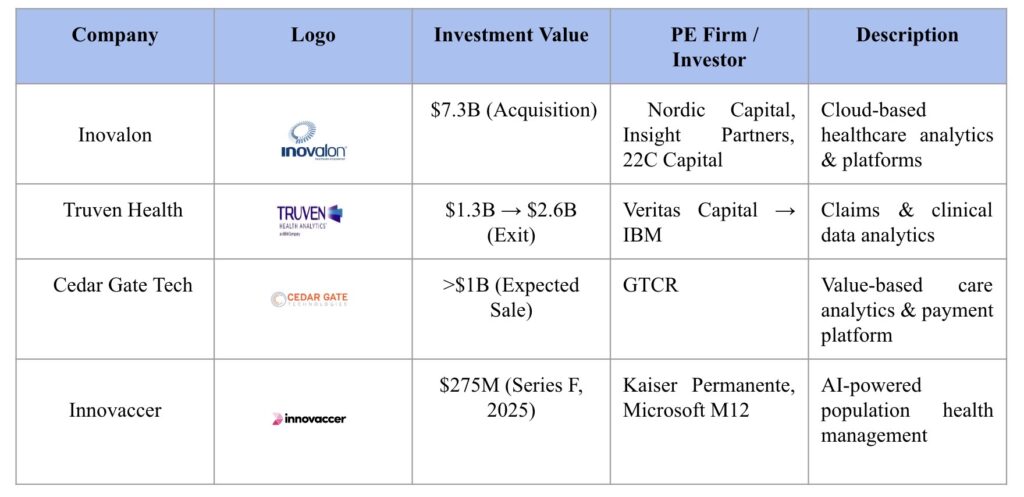
PE’s Billion-Dollar Bet on Population Health Analytics
What technological innovations are PE-backed practices adopting to improve VBC outcomes?
Health IT Investments: PE firms are investing in revenue cycle management, digital front doors (e.g., online scheduling, telehealth), and advanced EHR systems to streamline operations and improve patient engagement.
Data Analytics: Practices are adopting population health analytics and predictive modeling to identify at-risk patients and tailor interventions, supporting VBC goals.
Care Coordination Tools: Enhanced care management platforms and integrated communication systems are being deployed to improve chronic disease management and care transitions.
Specialty-Specific Tech: In specialties like anesthesiology and gastroenterology, PE-backed groups are implementing scalable clinical workflow solutions and telemedicine to increase efficiency and reach.
Outcome Tracking: These innovations enable better measurement of quality metrics, cost savings, and patient outcomes, aligning with value-based care incentives.
How might increased consolidation driven by PE affect healthcare competition locally?
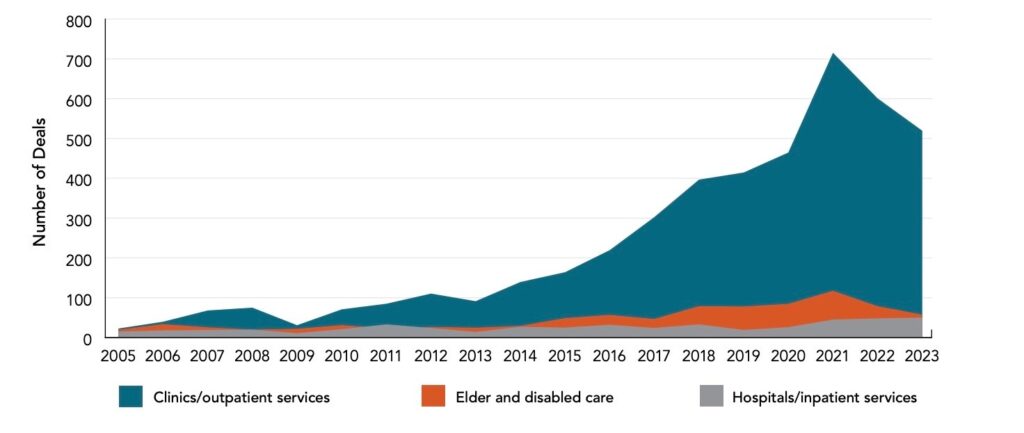
Market Concentration: PE acquisitions are consolidating fragmented markets, particularly in outpatient and specialty care, leading to fewer, larger provider groups.
Pricing Power: Studies show PE-acquired practices often negotiate higher prices with payers, resulting in increased costs per claim and higher allowed amounts for services.
Utilization Increases: After acquisition, PE-backed practices see more unique patients and higher encounter volumes, partly due to expanded marketing and operational scale.
Potential Downsides: Reduced competition may limit patient choice, increase healthcare spending, and make it harder for independent practices to survive.
Regulatory Attention: These trends have prompted scrutiny from policymakers and antitrust authorities concerned about market power and its effects on cost and access.
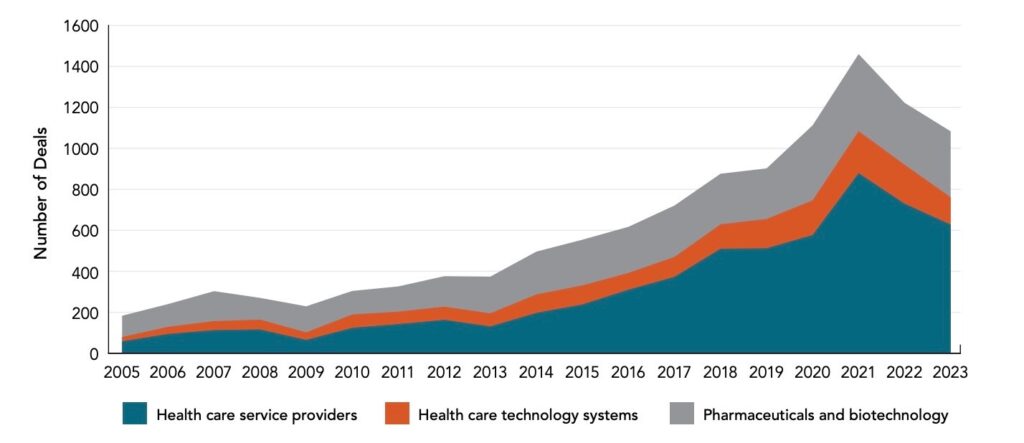
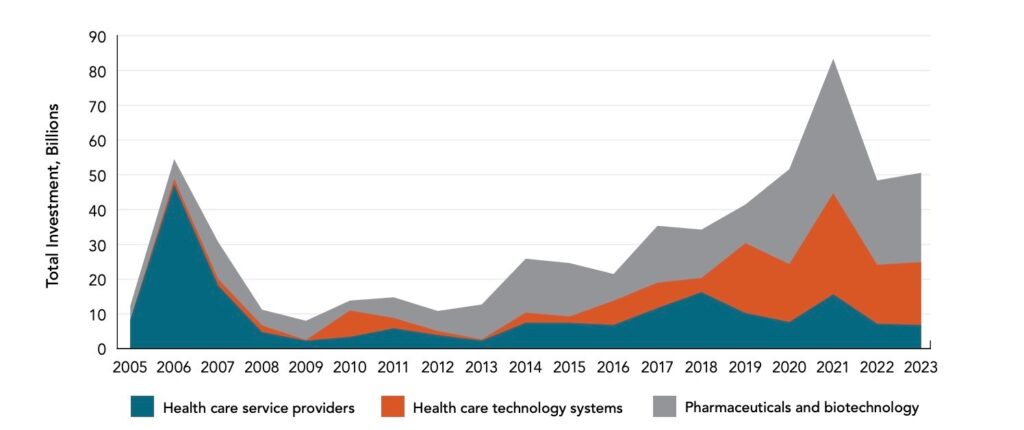
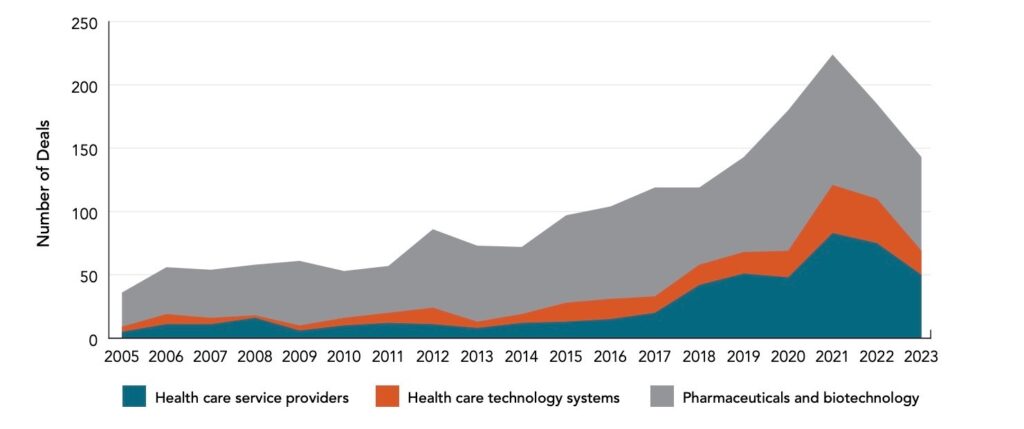
PE Investments in Health Care in the US, 2005–2023
Source:chcf.org
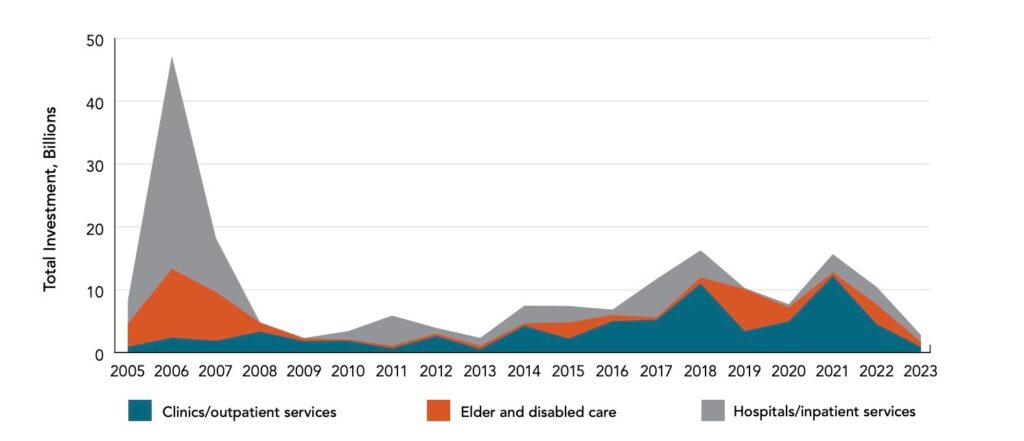
PE Acquisitions of Health Care Service Providers in the US, 2005–2023
Source:chcf.org
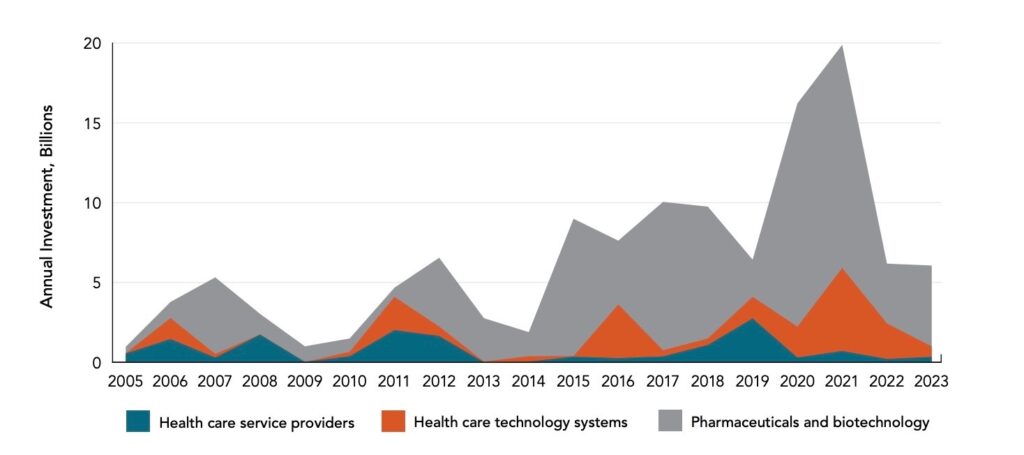
PE Investment in Health Care in California, 2005–2023
Source:chcf.org
What HCIT innovations are PE-backed practices implementing to enhance value-based care outcomes?
- PE-backed practices are investing in advanced EHRs, telehealth, and digital scheduling to improve patient engagement and care coordination.
- Population health analytics and predictive modeling are used to identify at-risk patients and tailor interventions, supporting value-based care (VBC) contracts.
- Enhanced revenue cycle management and automated billing systems improve financial performance and compliance.
- Specialty practices are adopting workflow automation and remote monitoring to increase efficiency and quality.
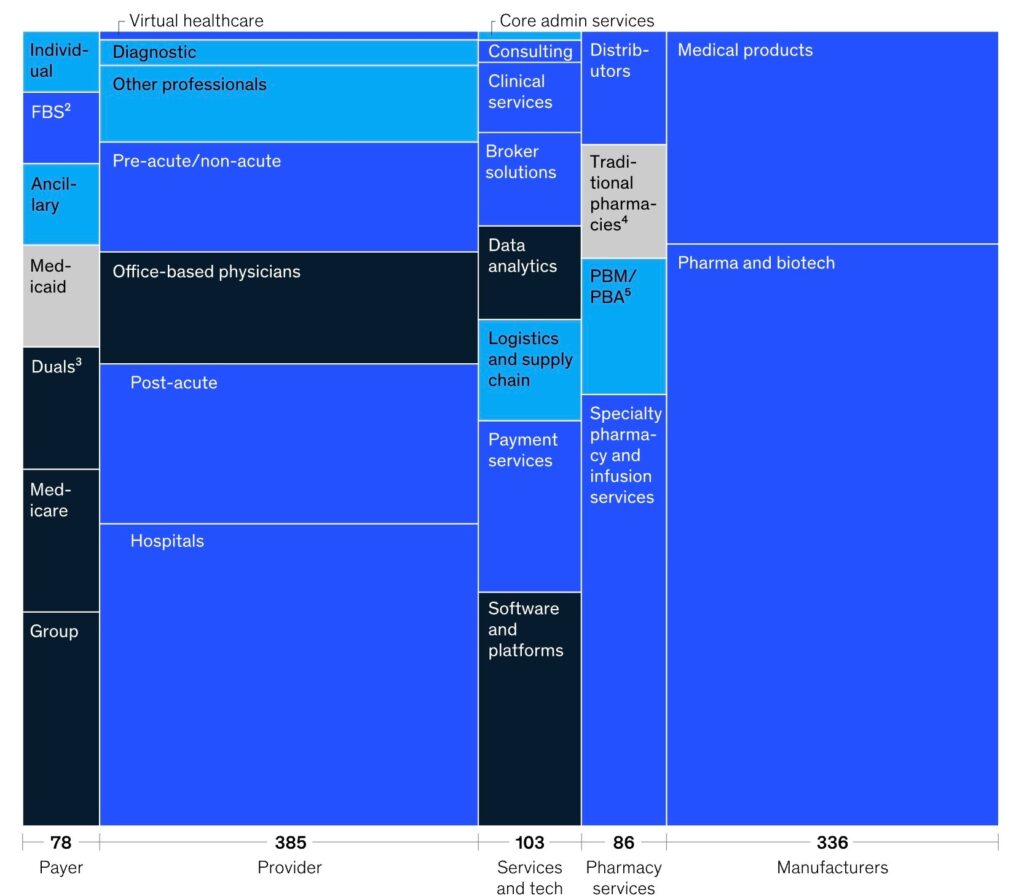
Total valuations of value-based care assets could reach $1 trillion
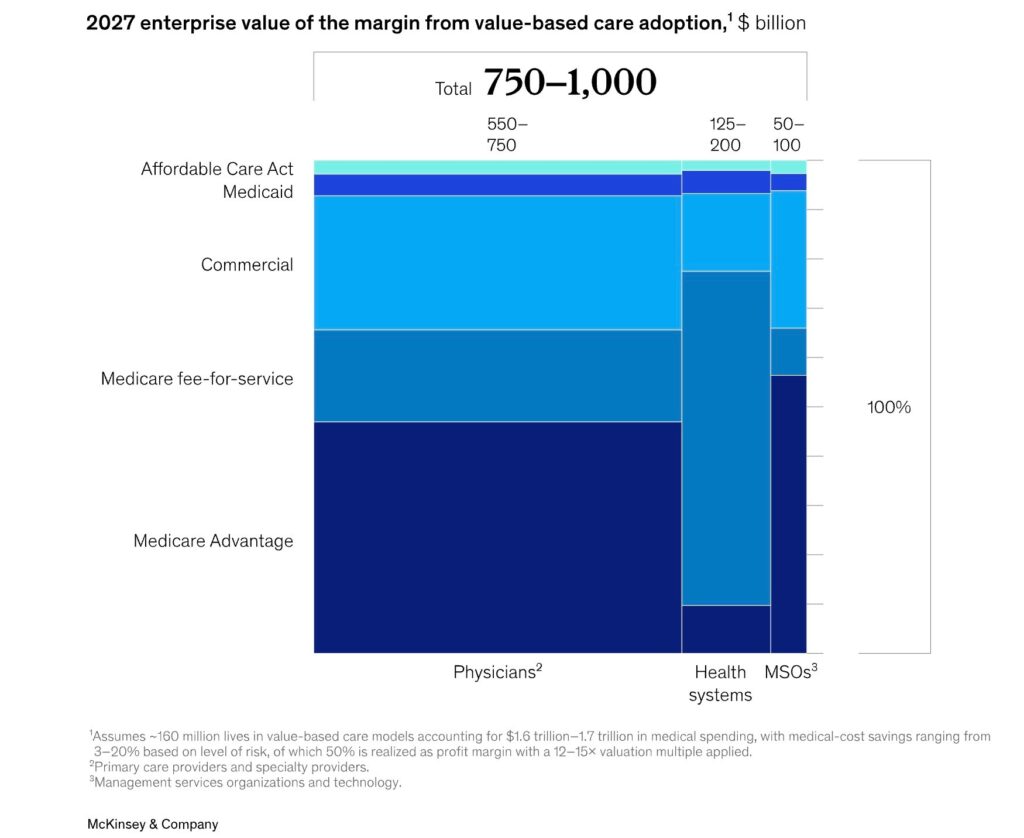
Distribution of projected healthcare EBITDA across healthcare segments, 2028, $ billion
Key US Healthcare Investment Trends to Identify High-Growth Opportunities in 2026
Outpatient and Ambulatory Care: Continued fragmentation in outpatient surgery centers, urgent care, and specialty clinics (e.g., dermatology, orthopedics) creates roll-up and platform-building opportunities.
Behavioral Health & Home-Based Care: Demand for mental health, substance use treatment, and home health services is surging, driven by payer incentives and consumer demand.
Healthcare IT & Value-Based Care Enablers: PE is targeting digital health, population health analytics, and care coordination platforms that support value-based care (VBC) contracts.
Specialty Physician Groups: Cardiology, gastroenterology, and women’s health practices are attracting PE due to reimbursement stability and consolidation potential.
How Consolidation in Diagnostics & Medical Devices Shapes US PE Exit Strategies?
Strategic Acquisitions: Consolidation in diagnostics (e.g., lab services, imaging centers) and medtech enables PE to build scale and operational efficiency, making assets attractive to large strategics and public markets.
Exit Pathways: Most lucrative exits are via strategic sales to national health systems, lab networks, or device manufacturers; IPOs are also viable for scaled, tech-enabled platforms.
Regulatory Environment: Increased FTC/DOJ scrutiny of healthcare consolidation requires careful deal structuring and proactive compliance.
Value Drivers: Integrated platforms with strong payer relationships, tech-enabled workflow, and geographic reach command premium valuations.
How AI Advancements Can Improve the Value of US Healthcare Portfolio Investments?
Revenue Cycle & Operations: AI-driven automation in billing, coding, and scheduling increases efficiency and reduces administrative costs in provider groups and outpatient centers.
Clinical Decision Support: AI is being deployed for imaging analysis, risk stratification, and remote patient monitoring—improving outcomes and enabling new service lines.
Patient Engagement: AI-powered chatbots, appointment reminders, and personalized care plans are boosting retention and satisfaction, key for VBC models.
Portfolio Differentiation: Early adoption of AI solutions can make portfolio companies more attractive for strategic buyers and public markets, supporting higher exit multiples.
Major Players in Population Health Analytics
Arcadia
Arcadia is a leading US-based healthcare data analytics platform specializing in integrating and harmonizing data from EHRs, claims, SDoH, and remote monitoring. Their platform delivers actionable insights for population health management, value-based care optimization, risk adjustment, and care gap closure. Arcadia is recognized for its AI-powered analytics and data governance capabilities.
Funding: $125 million from Vista Credit Partners in April 2023.
Strategic Objectives for Funding:
- Accelerate platform innovation and AI-driven analytics.
- Scale go-to-market strategy and reach more providers/payers.
- Enhance infrastructure and customer support for larger clients.
- Support strategic partnerships and acquisitions (e.g., CareJourney).
- Maintain leadership in data governance and measurable ROI.
Funding Source: [Fierce Healthcare]1, [MobiHealthNews],, [The SaaS News]
CitiusTech
CitiusTech delivers AI-driven analytics, interoperability, revenue cycle, and value-based care solutions for payers and providers.
Funding: Over $200 million (private; backed by BPEA EQT and Bain Capital).
Strategic Objectives for Funding:
- Expand AI/ML capabilities and product integration.
- Broaden US market reach and partnerships.
- Support M&A for complementary technologies.
Funding Source: [Bain Capital/CitiusTech press releases, industry news]
Health Catalyst
Health Catalyst offers a cloud-based data warehouse and analytics platform for healthcare organizations, focusing on outcomes improvement, risk adjustment, and population health management.
Funding: Over $600 million; listed on NASDAQ (HCAT).
Strategic Objectives for Funding:
- Accelerate R&D for new analytics modules.
- Expand sales and implementation teams.
- Enhance compliance and regulatory reporting.
- Pursue strategic acquisitions.
Funding Source: [SEC filings, Crunchbase, company press releases]
IBM Watson Health (Merative)
Merative (formerly IBM Watson Health) provides AI-powered analytics, clinical decision support, and population health management tools.
Funding: Acquired by Francisco Partners from IBM in 2022 for ~$1 billion.
Strategic Objectives for Funding:
- Continue product innovation post-acquisition.
- Expand AI and interoperability features.
- Deepen US market penetration.
Funding Source: [Francisco Partners/IBM press releases, industry news]
Inovalon
Inovalon offers cloud-based analytics for payers, providers, and pharmacies, focusing on quality measurement, risk adjustment, and population health insights.
Funding: Taken private in 2021 for $7.3 billion by Nordic Capital and Insight Partners.
Strategic Objectives for Funding:
- Invest in platform scalability and security.
- Expand payer and provider client base.
- Enhance AI and predictive analytics.
Funding Source: [Nordic Capital/Inovalon press releases, Reuters]
Optum Analytics (UnitedHealth Group)
Optum Analytics provides end-to-end data analytics, care management, and financial optimization solutions for payers and providers.
Funding: Part of UnitedHealth Group (NYSE: UNH), the largest US healthcare company.
Strategic Objectives for Funding:
- Continue innovation in analytics and AI.
- Expand integration with UnitedHealth’s networks.
- Invest in VBC enablement tools.
Funding Source: [UnitedHealth Group SEC filings, company reports]
Innovaccer
Innovaccer delivers a unified health data platform, population health analytics, AI-driven workflows, and interoperability tools for providers and payers.
Funding: Over $375 million (latest round in 2022; Tiger Global, Steadview, B Capital).
Strategic Objectives for Funding:
- Accelerate product development in AI and workflow automation.
- Scale US sales and customer success teams.
- Invest in interoperability and data integration.
Funding Source:[Crunchbase, company press releases]
SAS Institute
SAS provides advanced analytics, AI, and machine learning tools for healthcare, including population health and predictive modeling.
Funding: Privately held; estimated $3B+ in annual revenue.
Strategic Objectives for Funding:
- Expand healthcare-specific analytics offerings.
- Invest in cloud and AI capabilities.
- Deepen partnerships with US health systems and payers.
Funding Source: [Company reports, Forbes]
MedeAnalytics
MedeAnalytics specializes in real-time data integration, predictive analytics, and benchmarking for payers and providers.
Funding: Private, $150M+ estimated.
Strategic Objectives for Funding:
- Enhance real-time analytics and reporting tools.
- Expand managed services and consulting.
- Invest in compliance and security.
Funding Source: [Crunchbase, company press releases]
Prognos
Prognos Health provides diagnostic and transactional data analytics, with a health data marketplace and patient-specific insights.
Funding: Over $100 million (Cigna Ventures, Merck GHI, Safeguard).
Strategic Objectives for Funding:
- Expand data marketplace and analytics offerings.
- Invest in AI-powered patient insights.
- Broaden life sciences and payer partnerships.
Funding Source: [Crunchbase, company press releases]
Market Overview and Growth Drivers
Value-Based Care: A $1 Trillion Opportunity
- Market Size:
VBC projected to reach $1T in enterprise value by 2030 (McKinsey).
- Growth Catalysts:
- Regulatory Push: CMS aims for 100% Medicare beneficiaries in accountable care by 2030 (Bain).
- Cost Pressures: Healthcare spending outpaces GDP, driving efficiency demands (Bain).
- Tech Enablers: Advanced analytics and AI mature, enabling risk-based models (Bain, ATI Advisory).
Investor Takeaway: Macro tailwinds support scalable, tech-driven VBC platforms.
Investment Hotspots in Primary and Specialty Care
Where Capital is Flowing: Primary Care & Specialty Expansion
Primary Care:
- Medicare Advantage dominates (25% capitated payments); deals like Optum’s $2B Kelsey-Seybold acquisition (Bain).
- Growth Potential: <20% of payments have two-sided risk; headroom in Medicaid/commercial (Bain).
Specialty Care:
- Oncology/Cardiology: Episode-based models (e.g., WCAS-backed Valtruis in oncology) (Chartis, Bain).
- Orthopedics: Platforms like HOPCo target bundled payments (Bain).
Investor Takeaway: Diversify across high-margin specialties with standardized care pathways.
Operational Strategies for Value Creation
Driving ROI: Data, Cost Optimization & ESG
Tech & Analytics:
- AI-powered platforms (e.g., Innovaccer) reduce administrative burdens and improve risk stratification (Bain, McKinsey).
Cost Optimization:
- Top priority for 20% of PE firms; critical for margin improvement in distressed assets (BDO).
ESG Alignment:
- 84% of PE firms reject deals over ESG risks; focus on health equity and governance (BDO).
Investor Takeaway: Target assets with robust tech infrastructure and clear ESG roadmaps.
Risk and Regulatory Considerations
Navigating Risks: Due Diligence & Regulatory Shifts
Regulatory Hurdles:
- FTC scrutiny of consolidation; evolving CMS models (ACO REACH) (ATI Advisory, BDO).
Due Diligence Challenges:
Distressed assets require deeper operational/legal reviews (44% of PE firms cite inflation risks) (BDO).
Risk-Sharing Models:
Hybrid payment structures (e.g., capitation + shared savings) balance risk-reward (ATI Advisory).
Investor Takeaway: Prioritize platforms with regulatory expertise and flexible contracting.
Future Outlook and Strategic Recommendations
The Road Ahead: Scaling and Exits
Market Potential:
Fee-for-value models to capture 15-20% market share from FFS by 2030 (Bain).
Strategic Plays:
- Direct Participation: Acquire providers with proven outcomes (e.g., Humana’s $1.2B CenterWell expansion) (Bain).
- Enablers: Invest in analytics (Health Catalyst) or care coordination tools (Grant Thornton).
Exit Pathways:
- Strategic sales (e.g., Amazon’s $3.9B One Medical buy) or IPOs for scaled platforms (Bain).
Investor Takeaway: Build diversified portfolios with clear paths to profitability and exits.
References
https://pestakeholder.org/private-equity-healthcare-2023-trends/
https://www.bmj.com/content/382/bmj-2023-075244
https://www.bmj.com/content/382/bmj-2023-075244
https://jamanetwork.com/journals/jama-health-forum/fullarticle/2795946
https://pmc.ncbi.nlm.nih.gov/articles/PMC9125965/
https://www.sciencedirect.com/science/article/pii/S0168851025000223
https://p4h.world/app/uploads/2025/01/trends-financialisation-outpatient-care_dec-2024.x23411.pdf
https://pestakeholder.org/private-equity-healthcare-2023-trends/
https://pestakeholder.org/private-equity-hospital-tracker/
https://www.bain.cn/pdfs/202501101020214586.pdf
https://www.dimins.com/blog/2025/01/21/private-equity-landscape-in-healthcare-in-2025/
https://www.bain.cn/pdfs/202501101020214586.pdf
https://www.bain.com/insights/value-based-care-global-healthcare-private-equity-and-ma-report-2023/
https://www.bdo.com/insights/industries/healthcare/7-healthcare-private-equity-trends-to-know
https://www.etkho.com/en/value-based-healthcare-shifting-the-paradigm-in-healthcare/