

In recent years, we have witnessed the integration of technologies into healthcare, and this transformation continues in 2026 as well. Multiple forces are driving this shift, including an increase in chronic diseases, a shortage of clinical staff, demand for remote and affordable care, and increasing investments in digital infrastructure. The need for personalized medical care is accelerating the adoption of new technologies, innovations such as artificial intelligence (AI), remote monitoring, telemedicine, virtual care, and wearables. These innovations not only enhance the patient experience but also become the backbone of diagnosis, treatment, and hospital operations.
At Jirizmi, we conduct a comprehensive analysis of emerging healthcare trends, identifying the technologies and the leading innovators that are reshaping the industry.
In this blog, we will discuss the top 5 healthcare technology trends shaping 2026.
AI-Powered Diagnosis & Predictive Analytics
AI once seemed theoretical, but it has become a reality, transforming the entire landscape from diagnosis to treatment. It scans X-rays, CT scans, MRI images, ultrasound recordings, and patient history, and provides output within seconds that may be invisible to the human eye. It assists doctors in delivering better outcomes, detecting early signs of diseases such as cancer, stroke, tuberculosis, and heart disorders with remarkable accuracy.
Additionally, with the help of a wearable device, patients’ lifestyle patterns are tracked and used to forecast future health risks. With these technologies, millions of lives can be improved. It can predict disease susceptibility in the population and provide deeper insights into human health.
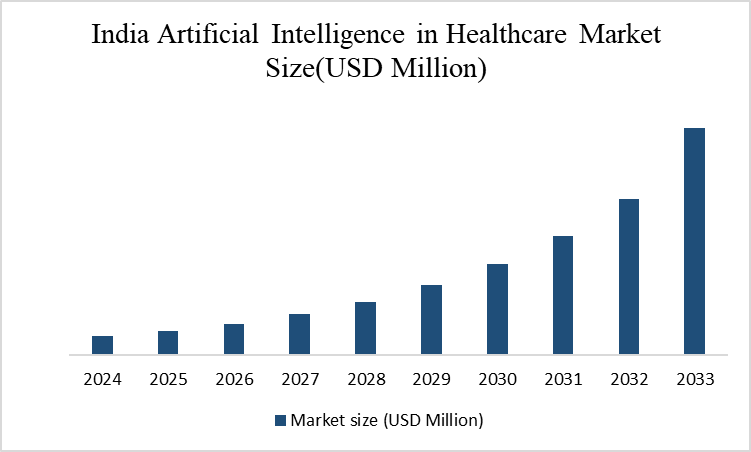
According to a report published by IMARC, India’s Artificial Intelligence in healthcare market was valued at USD 333.16 million in 2024 and is predicted to reach USD 4,165.26 million by 2033, with a CAGR of 30.78% between 2024 and 2033.
Hospital-at-Home Models: Care Beyond Hospital Walls
Healthcare is shifting from traditional systems to modern technologies. In the new era, technologies are evolving to help patients who prefer to avoid hospital admissions and hospital visits. Devices such as smart vital trackers, ECG patches, blood pressure monitors, oxygen sensors, and AI-enabled alert systems enable doctors to remotely track their patients. Especially the patients who are suffering from chronic disease and need post-surgery treatment from their own home greatly benefit from these technologies. With the help of these devices, doctors and the care team get real-time data on patients. In case of any abnormality, doctors and the care team will immediately respond.
It has been found that patients recover faster when close to their loved ones, especially in their comfort zone. This model is more suitable for patients who don’t require much attention and care, unlike critically ill patients, which will directly reduce the cost of their treatment. Additionally, it will reduce the hospital’s staff workload and give more care to critical patients.
3D Bioprinting and Personalized Medical Manufacturing
The adoption of 3D printing has increased rapidly globally as well as in India. This technology is completely transforming the way doctors plan and perform surgeries. 3D printing technology plays a vital role in healthcare, from patient-specific implants, surgical guides, prosthetics, and advanced tissue engineering scaffolds. It significantly enhances surgical outcomes and patient recovery. Although creating living tissues may seem unrealistic, it represents the future of healthcare, the beginning of a new era where, using bioprinting, developers can create cartilage, skin, and vascular structures. In 2026 and beyond, with the help of 3D printing, patients may no longer rely on the donor. With government support and homegrown companies, this technology has become more accessible, and it has the potential to save millions of lives.
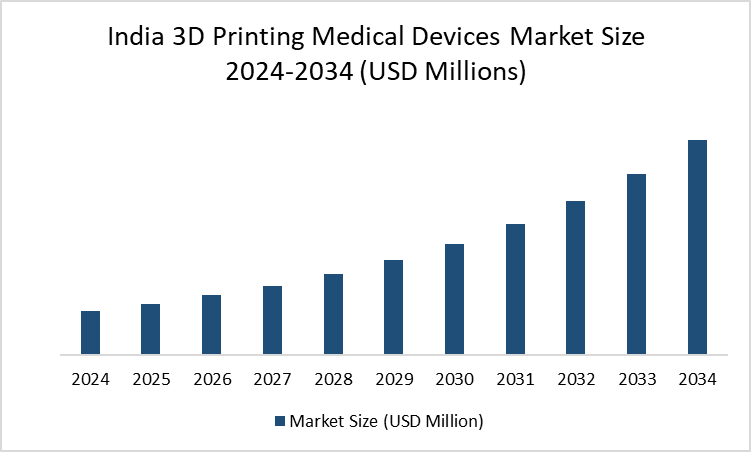
India’s healthcare 3D printing segment continues to exhibit robust momentum, valued at USD 145.34 million in 2024 and expected to attain USD 680.92 million by 2034, maintaining a strong 16.70% CAGR from 2025 to 2034.
Predictive Public Health Using AI and Data Analytics
In the past, predicting an outbreak like COVID-19 was hard. However, AI has completely transformed the entire landscape. It can analyze data and forecast future risk, so that the government can make smarter decisions before the outbreak of any disease. It will detect early outbreaks by analyzing patient trends, climate patterns, and lab reports. This will help the government prepare itself, take preventive measures, run health-driven programs, vaccination drives, and awareness campaigns. India has already been using these technologies and is ready for future risks.
Digital Humans: AI Nurses, Virtual Physiotherapists, and Medical Chatbots
Digital humans represent an emerging technology that extends the patient’s reach to receive guidance and support for their medical condition from a virtual caregiver at any time, from any place. While some think this technology will replace doctors, this is not accurate. Rather, it will extend their reach, improve efficiency, and improve their relationship with patients. Generative AI therapeutics assistants (DTx), medical chatbots, virtual physiotherapists, and AI nurses are the new normal. Generative AI therapeutic assistants (DTx) and medical chatbots are gaining popularity.
Many non-communicable diseases like diabetes, depression, hypertension, and chronic pain are growing, leading to the adoption of digital technologies in India, and startups, healthcare providers, and digital developers are actively developing these systems. It is the beginning of a new era, where everyone gets care without restrictions, location boundaries, stigma, waiting rooms, and limits.
Challenges and Regulatory Concerns in Adopting New Healthcare Technologies
The major concerns in adopting new healthcare technologies are:
- Data privacy
- Lack of a clear regulatory framework
- In the early phase, human oversight is essential.
- High maintenance and implementation cost.
- Lack of interoperability delays real-world implementation
- Lack of knowledge and fear of job replacement
- Ethical Concerns Around Automation
- Lack of training and difficulty in using new technologies
India Outlook
India is rapidly growing in Artificial Intelligence. Many startups are actively investing in the AI field, and the number of homegrown companies is constantly increasing. This could not have happened without the support of the government, domestic med-tech parks, programs such as IndiaAI mission, Startup India, Make in India incentives, Atmanirbhar Bharat Abhiyan, PLI, and a growing market demand for both startups and established manufacturers. India has a large talent pool in engineering and technology, which is important for AI research and development.
Conclusion
We can’t deny the fact that the definition of healthcare has been modernized, and the breakthrough technologies play an important role in this transformation. Modern technologies, such as AI assistants, digital health solutions, advanced wearables, 3D printing for medical applications, and predictive analytics, are transforming traditional treatment cycles. 80% of healthcare professionals believe AI can automate repetitive tasks, help to reduce administrative burden, and improve efficiency.
However, it enhances the experience with proven data and gives smarter, faster, and more personalized treatment to patients. AI is no longer optional; it is essential. Still, it must be deployed responsibly, inclusively, and ethically. As we move forward, there is strong potential for improved healthcare outcomes globally.