

Introduction
Over the past few years, Artificial Intelligence (AI) has been transforming the healthcare landscape, in many areas from surgeries to digital health. One rapidly emerging digital health innovation is generative AI therapeutic assistants, often integrated within digital therapeutics (DTx) platforms, which play a vital role in this transformation. It combines AI-driven conversational intelligence with clinically validated treatment pathways. This improves clinical outcomes, treatment planning, and guides patients through recovery.
These systems integrate diverse data sources, iteratively refining outputs and leveraging vast knowledge bases to deliver context-aware, patient-centric care with heightened precision and reduced error rates.
As chronic diseases rise and mental health needs remain unmet, this shift represents a revolution in digital care. This growing need for continuous, personalized, and scalable care is driving the rapid adoption of digital therapeutics worldwide.
Many non-communicable diseases like diabetes, depression, hypertension, and chronic pain are growing, leading to the adoption of digital therapeutics in India. Therefore, startups, healthcare providers, and digital therapeutics developers are actively developing and investing in these solutions.
Unlike traditional wearables or glucose monitors, DTx go beyond tracking; they deliver evidence-based interventions to prevent, manage, and treat chronic conditions such as diabetes, hypertension, and mental health disorders.
As healthcare systems worldwide move toward preventive and continuous care models, digital therapeutics are rapidly emerging as a scalable solution.
In India itself, the adoption of digital therapeutics is gaining momentum, driven by the rapid growth of health technology, increased smartphone penetration, and the need for innovative solutions to manage chronic diseases.
In this article, we’ll dive deep into Generative AI Therapeutic Assistants, highlighting their key capabilities, challenges, opportunities, and future potential.
Need for AI Therapeutic Assistants
• 74% of Global Deaths are due to Chronic Diseases
According to the World Health Organization (WHO), non-communicable diseases account for approximately 74% of global deaths. Human lifestyle has changed a lot with long sitting hours, late nights eating, and junk food, which leads to a rise in non-communicable diseases like obesity, diabetes, hypertension, and heart disease.
Generative AI therapeutic assistants provide personalized guidance and continuous support, analyze patients’ long-term behavior, and enhance treatment, reducing reliance on periodic clinical visits.
• Mental Health Demand Exceeds Human Supply
According to industry data, more than half of mental-health patients globally have no regular access to therapists due to cost, availability, stigma, or geography.
This is where AI-powered assistants fill the gap with 24/7 private, non-judgmental, confidential conversations.
Market trends of Digital Therapeutics worldwide
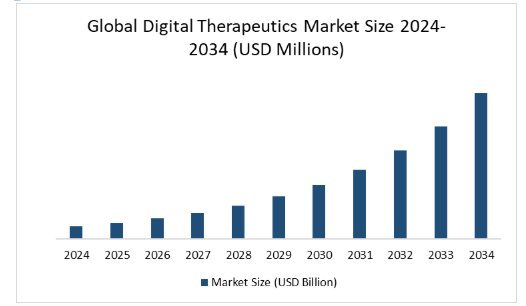
The global digital therapeutics market is expected to grow at a CAGR of 27.8% from 2025 to 2034. The size of this market in 2024 is calculated at USD 7.7 billion and is projected to reach around USD 90.83 billion by 2034.
North America accounted for a 41% share of the digital therapeutics market in 2024. Moreover, the Asia-Pacific region is expected to grow faster in the coming years.
In 2024, the diabetes segment is the major market holder, and it is anticipated that the obesity segment will grow faster in the coming years.
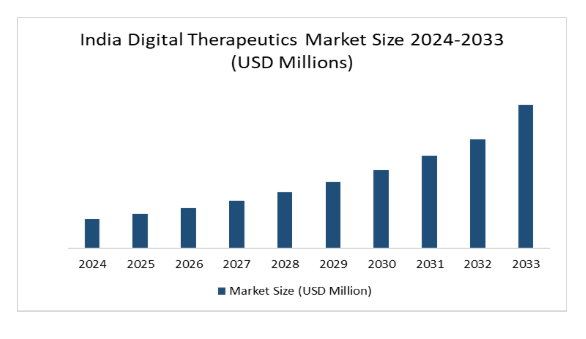
It is predicted that the Indian digital therapeutics market will expand at a CAGR of 18.05% between 2025 and 2033. In 2024, it is calculated at USD 220.1 million, and it is projected to reach around USD 1094.9 million by 2033.
Generative AI In Healthcare Market Summary: Global and India
Global
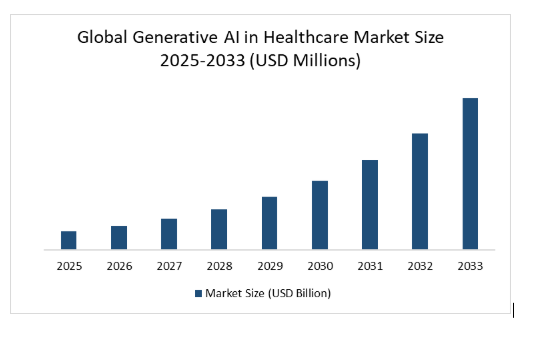
According to a survey, the global generative AI market is expected to grow at a CAGR of 30.1% between 2025 and 2033. The market size in 2024 is estimated at USD 2.17 billion and is projected to reach 23.56 billion by 2033.
India
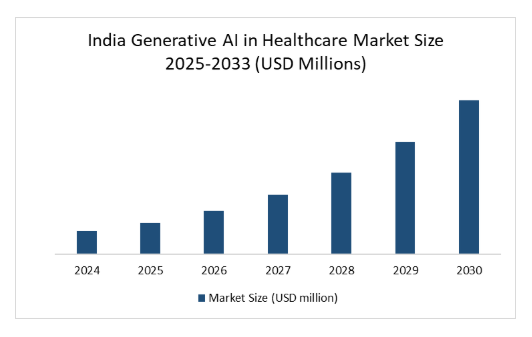
It is predicted that the Indian healthcare generative AI market will expand at a 37.3% CAGR between 2024 and 2030. The size of this market is projected to reach US$856.6 million by 2030.
How Generative AI Therapeutic Assistants Differ
| Capabilities | Description |
| Conversational AI along with Clinical Knowledge | Understand emotion and tone Ask follow-up questions Deliver structured therapeutic interventions Track past behaviors and preferences |
| Behavioral and Biometric Data Integration | Wearable biometric streams Daily mood logs Sleep, diet, and activity data Self-reported symptom metrics |
| Autonomous Preventive Intervention | Detect early warning signals Predict spikes in blood sugar Predict spikes in blood pressure Identify risk patterns and give alerts |
| Affordable and Easily Accessible | Cost-effective and widely accessible to the people. |
| Evidence-Based Digital Therapies | CBT (Cognitive Behavioral Therapy) ACT (Acceptance & Commitment Therapy) Sleep hygiene programs Behavior change coaching Medication reminders |
Clinical Outcome
Research on digital therapeutics has shown measurable, clinically important improvements in the management of chronic diseases and mental health conditions.
| Therapeutic Area | AI/DTx Intervention Outcome | Measured Improvement | Time Period/ Duration |
| Diabetes(Type-2) | AI-based digital therapeutics program for glycemic control | 0.67% average reduction in HbA1c | ~3 months |
| Diabetes (poorly controlled patients) | Personalized AI-driven DTx interventions | Up to ~1.08% reduction in HbA1c | ~3 months |
| Hypertension (Stage-2) | Digital hypertension management & monitoring | 84% sustained blood pressure control | 3 years |
| Mental Health (Depression) | AI-guided CBT (Cognitive Behavioral Therapy) digital program | 7.3-point reduction in PHQ-9 depression score | varies (typically 6-12 weeks) |
Future potential
In the coming years, we can see the use of generative AI therapeutic assistants as common as telemedicine or electronic medical records. They are not replacing doctors and therapists; rather, it’s strengthening them, and together they will assist patients with more care.
Generative AI therapeutic assistants will track patients by combining wearable sensor data, sleep, diet, stress, and activity patterns to generate a comprehensive 360° health profile. By this, patients can easily detect the triggering points in their environment and work on them. It is the beginning of a new era where everyone gets care without restrictions, location-based boundaries, stigma, waiting rooms, or limits; and generative AI therapeutic assistants are fully fit.
Due to the rise in personal care adoption, many companies, including Wysa, Amaha, Infiheal, DocVita, and Lissun, are establishing dominance in this space. To explore and connect with leading mental health solution providers, you can reach out to Jirizmi. The future of generative AI therapeutic assistants in India, a densely populated country with constrained resources, is promising.
Conclusion
Artificial intelligence has already surprised the world with its capabilities, but integrating it with digital therapeutics will bring about remarkable, consequential shifts in the history of digital health. It is the beginning of a never-ending era where simple chatbots and reminder systems are rapidly evolving into a new clinical paradigm.
That integrates seamlessly into daily life and provides continuous, intelligent, context-aware care with full authenticity. Much research is being conducted, and many are participating in it, which represents the revolution in personal care.
Over the next decade, we can see a rise in the adoption of generative AI therapeutic assistants, which will reduce the burden on health workers and fill the gap, and become a platform between patients and doctors.