

Discover the challenges, myths, and opportunities shaping menstrual wellness in India and the mission to make menstrual health more accessible for every woman.
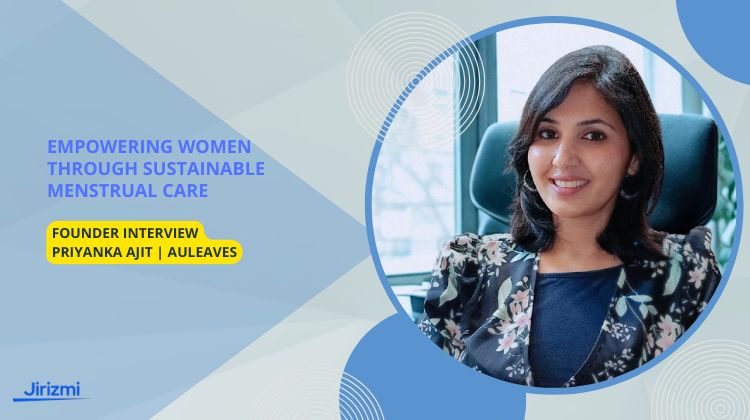
At Jirizmi’s healthcare founder interview series, we speak with innovators building impactful solutions across healthcare and health-tech ecosystems. In this conversation, we spoke with Priyanka, founder of Auleaves a menstrual health behavior-change platform focused on sustainable period care and menstrual wellness education.
From working with rural women in factories to conducting awareness sessions in schools and Anganwadis, Priyanka is building more than a product company. Through menstrual cups, education programs, and structured wellness initiatives, Auleaves aims to normalize conversations around menstrual health while helping women adopt healthier and sustainable alternatives.
In this interview, Priyanka shares her founder journey, challenges in menstrual health awareness, myths around menstrual cups, workplace wellness programs, rural adoption stories, and her larger vision for menstrual health policy and education in India.
Key Takeaways
1. Menstrual Health Is Still Deeply Stigmatized
2. Education & Trust Matter More Than Product Sales
3. One Empowered Woman Can Influence an Entire Community
4. Schools & Workplaces Need Stronger Menstrual Wellness Programs
5. India Needs Accessible & Localized Menstrual Health Solutions
Founder Journey & Inspiration
Interviewer:
What inspired you to start Auleaves?
Priyanka:
The inspiration came from a very personal place. I’ve been using menstrual cups myself for almost a decade. Initially, I used to quietly help women around me – friends, colleagues, and relatives – switch from pads to cups because I personally found them much more comfortable and sustainable.
But one incident completely changed my perspective.
I watched a documentary where a daily wage worker explained how she managed her periods while working. She said she would tear strips from an old saree and continue working because she couldn’t afford to miss work or buy proper menstrual products.
That moment really stayed with me.
I realized I already knew about a solution that could genuinely help women like her. That was the point where I decided I wanted to build something larger and reach women who truly needed sustainable and affordable menstrual health solutions.
That’s how Auleaves started.
Interviewer:
What does the name “Auleaves” mean?
Priyanka:
The name actually comes from two words.
“Au” is the chemical symbol for gold, and “Leaves” represents nature and wellness.
The thought behind the name is that a woman’s body is as precious as gold, and it deserves care that is healthy, sustainable, and nurturing.
Also, we are not just a menstrual cup company. Auleaves is fundamentally a menstrual health behavior-change platform.
We work on two major areas:
- Sustainable period products
- Structured menstrual wellness and education programs
Our mission is to help women change the way they view and manage menstrual health.
Interviewer:
Was there a specific reason you focused particularly on menstrual cups instead of other menstrual products?
Priyanka:
Yes, because I had personally experienced the benefits of menstrual cups for years.
I had severe discomfort and rashes while using pads, especially because I traveled frequently. Switching to cups improved my experience significantly.
So naturally, when I thought about building something meaningful in menstrual health, cups became the focus.
Initially, I thought adoption would be easy. I assumed that if women understood the health, financial, and environmental benefits, they would switch quickly.
But once I started working on the ground, especially with rural communities and factory workers, I realized the challenge was much deeper.
The issue was not just access to products.
It was silence, stigma, lack of education, myths, and discomfort around even discussing periods openly.
That changed my entire approach.
Menstrual Health Challenges & Awareness
Interviewer:
What are some of the biggest myths or concerns women have around menstrual cups?
Priyanka:
There are many misconceptions.
Some women believe menstrual cups can cause infertility. Others worry the cup might get “lost” inside the body or move into the uterus because they don’t fully understand anatomy.
There are also concerns around leakage, virginity, hygiene, and safety.
One major issue is that many women have previously used poor-quality cups made from rubber or low-grade materials. After having a bad experience, they become hesitant to trust menstrual cups again.
That’s why education becomes extremely important.
Before introducing the product, we first build trust and create safe spaces where women feel comfortable discussing menstrual health openly.
Product, Platform & Differentiation
Interviewer:
How does Auleaves differentiate itself from other menstrual cup brands?
Priyanka:
Most companies focus on selling products.
We focus on behavior change.
At Auleaves, we do not measure success by the number of products sold. We measure success by how many women successfully switch from pads to menstrual cups and continue using them comfortably.
A large part of our work is B2B wellness programs with factories, institutions, schools, and communities.
We conduct structured awareness programs, provide guided onboarding, and continue follow-ups for months to ensure women feel supported throughout the transition.
We also provide 24/7 support because first-time users often need reassurance and guidance.
That human support system is a huge part of what makes us different.
Teenage Menstrual Health
Interviewer:
Are menstrual cups suitable for teenagers as well?
Priyanka:
Yes, absolutely.
We specifically design softer and smaller-sized cups for teenagers and first-time users.
In fact, I personally believe young girls should receive proper menstrual education and safer menstrual product awareness from the beginning instead of struggling with discomfort for years.
But the key again is guidance and education.
Teenagers need reassurance, awareness about anatomy, and proper support during the transition.
Scaling & Key Learnings
Interviewer:
What have you learned while scaling this initiative?
Priyanka:
The biggest lesson is that trust comes before scale.
Initially, I thought awareness about benefits alone would be enough. But menstrual health is deeply emotional and socially conditioned.
Women need to feel safe before they feel open to change.
So now, our focus is less about aggressive scaling and more about building credibility, trust, and long-term behavioral transformation.
Once women trust you, they become advocates themselves.
Menstrual Education in Schools & Workplaces
Interviewer:
Do you think menstrual education should become a stronger part of schools and workplace wellness programs?
Priyanka:
Absolutely.
Menstrual education is critically important.
In many schools, especially government schools, girls are not properly taught about menstrual health. Sometimes chapters are skipped entirely because teachers feel uncomfortable discussing them.
As a result, girls grow up feeling shame around a completely natural biological process.
When we conduct sessions in schools, we realize many girls don’t even fully understand their own anatomy.
That’s a serious gap.
Menstrual education should not only be about hygiene, it should also focus on body awareness, emotional confidence, health literacy, and breaking stigma.
And workplaces should also integrate menstrual wellness into employee wellness initiatives because it directly impacts comfort, productivity, and overall well-being.
Role of Men & Society
Interviewer:
What role do men need to play in normalizing menstrual health conversations?
Priyanka:
A very important role.
The silence around periods has often been maintained through absence- fathers avoiding the topic, brothers leaving the room, male teachers skipping chapters, and workplaces treating it as a “women-only issue.”
That silence teaches girls that periods are something shameful.
Men do not need to become “saviors,” but they do need to become participants in the conversation.
A father who comfortably buys pads, a brother who understands menstrual health, or a male manager who supports workplace wellness policies can make a huge difference in removing stigma.
Message for Young Girls
Interviewer:
What message would you like to give young girls who are just starting their menstrual journey?
Priyanka:
I would want every girl to know this:
Her body is not a problem to be managed, and her period is not a secret to hide.
Periods are a sign of health and life.
The shame many girls carry is something society has handed to them and they are allowed to let go of that shame.
That is exactly why Auleaves exists: to help girls and women feel informed, confident, and comfortable with their bodies.
Regional Outreach & Community Programs
Interviewer:
What regions are you currently working in?
Priyanka:
We have conducted programs across multiple regions including:
- Madhya Pradesh
- Uttarakhand
- Bihar
- Odisha and nearby regions
Currently, during Menstrual Hygiene Month, we are conducting awareness programs in schools, colleges, sports communities, and Anganwadis.
We are also focusing on athletes and swimmers because menstrual cups allow women to continue training comfortably even during periods.
Future Vision & Innovation
Interviewer:
What is your long-term vision for Auleaves?
Priyanka:
I want Auleaves s to become part of the larger menstrual health ecosystem in India.
In the coming years, I want us to contribute to menstrual health policy discussions, workplace wellness frameworks, and nationwide menstrual education programs.
We are also working toward building a multilingual menstrual health app for Indian women.
The idea is to create a platform where women can:
- Track menstrual cycles
- Access menstrual education resources
- Speak with gynecologists
- Watch educational videos
- Receive wellness support in regional languages
There is still a huge gap in accessible menstrual health information in India, especially for rural women.
We want to help bridge that gap.
Funding & Expansion
Interviewer:
Are you currently bootstrapped, or are you looking for funding?
Priyanka:
We are currently bootstrapped.
However, we are actively looking for funding support to scale our wellness programs, technology platform, impact reporting systems, and menstrual health app initiatives.
A major part of our work also happens through our awareness wing, Freedom Circle Foundation, through which we conduct workplace wellness and CSR-linked menstrual health programs.
We believe there is a significant opportunity for organizations and CSR leaders to contribute meaningfully toward menstrual health awareness and behavioral change initiatives in India.
Closing Note
Priyanka’s journey highlights how healthcare innovation often begins with empathy, lived experience, and grassroots conversations.
By combining sustainable menstrual products with education and long-term behavioral support, Auleaves is working toward a future where menstrual health is no longer treated as a taboo topic, but as an essential part of public health, workplace wellness, and women’s empowerment.
As menstrual health conversations continue evolving across India, initiatives like Auleaves are helping build awareness, accessibility, and confidence – one conversation at a time.