

Introduction
In the past few years, India has become popular for global clinical research. It is one of the top 2 destinations for new clinical trial registrations. And this represents a ~23% global share, up ~50% year of year.
Several factors speed this up, including a large population, cost, and a diverse disease profile.
Global pharma and biotech companies are now seeing India as a hotspot destination. The cost of a clinical trial in India is approximately 50% lower than in the U.S. and Europe. This significantly reduces research costs for global pharmaceutical companies. But is that the only reason?
Time, cost, patient recruitment, and several other challenges are present when conducting clinical trials worldwide. Despite these challenges, how is India overtaking the 2nd position worldwide?
In this article, we will compare clinical trials in India to global trials in terms of cost, time, and success rate. And, we will also try to ponder on why and how clinical research in India is growing.
Clinical Trials Market Size
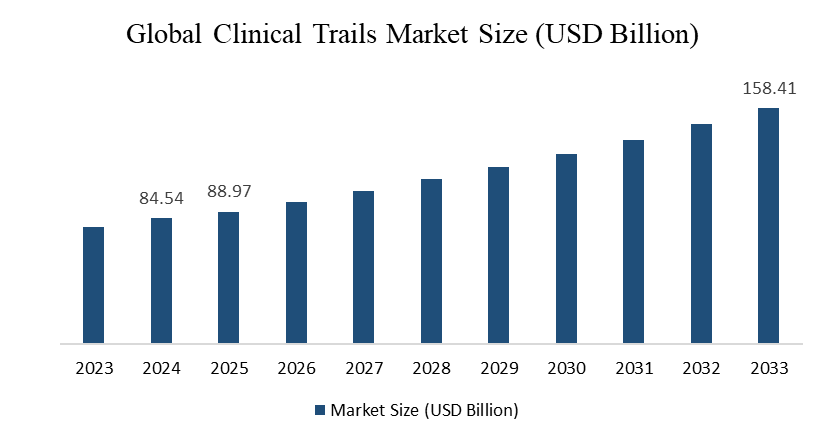
The global clinical trials market size was estimated at USD 84.54 billion in 2024 and is projected to reach USD 158.41 billion by 2033, growing at a CAGR of 7.5% from 2025 to 2033.
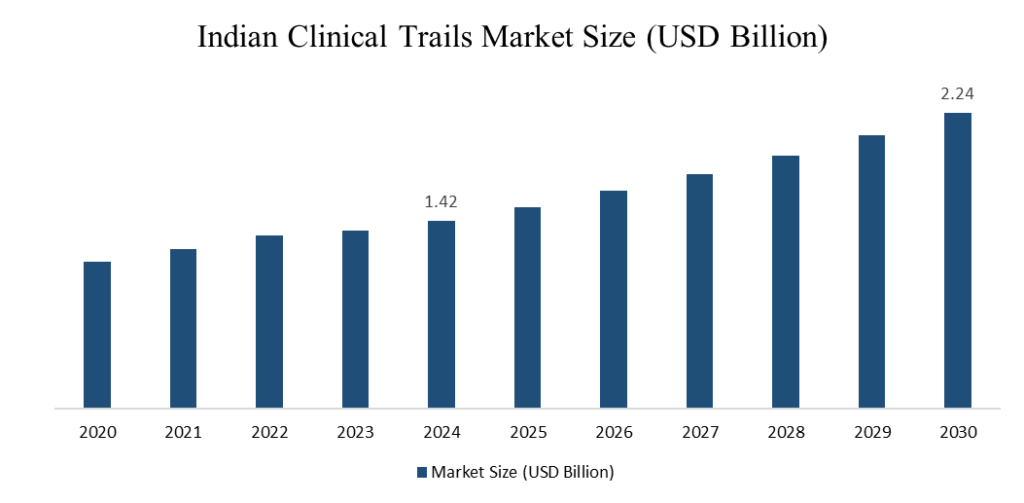
The Indian clinical trials market is valued at USD 1.42 billion in 2024 and is expected to grow at a CAGR of 8.0% from 2025 to 2030, driven by the expanding pharmaceutical and biotechnology sectors.
India’s Clinical Trial Landscape
According to the Grand View Research report
- In 2024, the phase III trial segment was dominated with 53% revenue share in the Indian clinical trials industry.
- Now, India is rapidly growing their market share in the phase I segment with a CAGR of 9.7%. The factors that accelerate the growth are the demand for innovative treatments, particularly in oncology and rare diseases.
The Cost of Clinical Trials in India vs. Developed Countries
Before approval for public use, new drugs, medical devices, and therapies are evaluated in clinical trials in phases to evaluate safety, efficiency, and side effects. The cost of these processes is high due to complexity, stringent regulations, and high resource demands.
Several factors that increase the cost are:
- Paperwork, approvals, and monitoring add to the cost.
- Extensive testing
- Highly trained doctors, scientists, and staff are needed.
- Every patient must be monitored closely.
- Trials can take many years to complete.
- Machines, labs, and medicines used in trials are expensive.
Let’s break down the cost of clinical trials in India vs. Western countries.
| Factor | India | Global |
| Phase 1 | Lower (30–50%) | $1–2 million |
| Phase 2 | Lower (30–50%) | $7–20 million |
| Phase 3 | 40-60% less | $20–100 million |
| Total trail cost | $1–3 million | $30–50 million |
Clinical Trial Approval Costs: India vs. U.S
For clinical trials in India, the sponsor obtains approval for a new drug from the Central Drugs Standard Control Organization (CDSCO), the national regulatory authority (NRA). “In the U.S., sponsors submit an Investigational New Drug (IND) application to the FDA to initiate clinical trials. Unlike India, no fee is charged for this approval. Here is the comparison table of the approval fee of a clinical trial in India Vs. U.S for a new drug:
| Phases | India | U.S | Trail |
| First phase | Rs. 3,00,000 | $0 | Human trial |
| Second phase | Rs. 2,00,000 | $0 | Exploratory trail |
| Third phase | Rs. 2,00,000 | $0 | Confirmatory trial |
| Fourth phase | Rs. 2,00,000 | $0 | Post-marketing studies |
| Drug approval (final) | Relatively low (varies) | ~$4.3 million | Market authorization (NDA/BLA) |
While clinical trial approval in the U.S. does not involve direct FDA fees, overall clinical trial costs are significantly higher due to operational and execution expenses.
Why Global Pharma Companies Are Moving Trials to India
Peyton Howell, the chief executive of Parexel, said, “India plays an essential role in global clinical trials and is becoming a pillar of the industry.” Especially for studies such as oncology, cardiology, rare disorders, and infectious diseases, a highly diverse patient pool is needed.
Relative to the developed countries such as the United States and Europe, Clinical trials in India are significantly more cost-effective, with savings of up to 40%. Beyond cost advantages, India’s growing expertise in hybrid and decentralized trial models helps address critical challenges such as patient retention and real-time data collection.
However, the Central Drugs Standard Control Organization (CDSCO) has established a strong regulatory framework, in line with global standards agencies such as the U.S. Food and Drug Administration and the European Medicines Agency. These changes have swift approval timelines while ensuring strong ethical oversight.
Mutually, these factors position India as a well-thought-out partner in global drug development, rather than just a service provider.
Disadvantages of clinical trials in India
The rise of clinical trials in India comes with some risks. Several challenges and issues cannot be ignored and must be addressed by the Indian authorities. Foreign investors’ main focus is to earn more profit instead of patient welfare. Generally, patients from rural areas are not well educated or aware of the rules, processes, diseases, treatments, and risks.
Chances are that these companies may exploit patients and even hide some information from them. Indian authorities have to ensure that the patients’ welfare comes first.
If the Indian government does not make strict rules, then these foreign investors may exploit patients.
Final thought:
Initially, most of India’s clinical trials revenue was generated from phase 3. But now India is slowly entering phase 1 trials in the drug development process.
India didn’t achieve higher drug success rates. But quickly became a key player in the global clinical trials ecosystem. It will become a hot spot for conducting trials because of faster patient recruitment and cost efficiency.
However, the government needs to monitor these foreign investors to ensure that patients’ well-being comes first.
References: